

Quick Finish Problem Guide
What you see | Most likely issue | What it usually means |
|---|---|---|
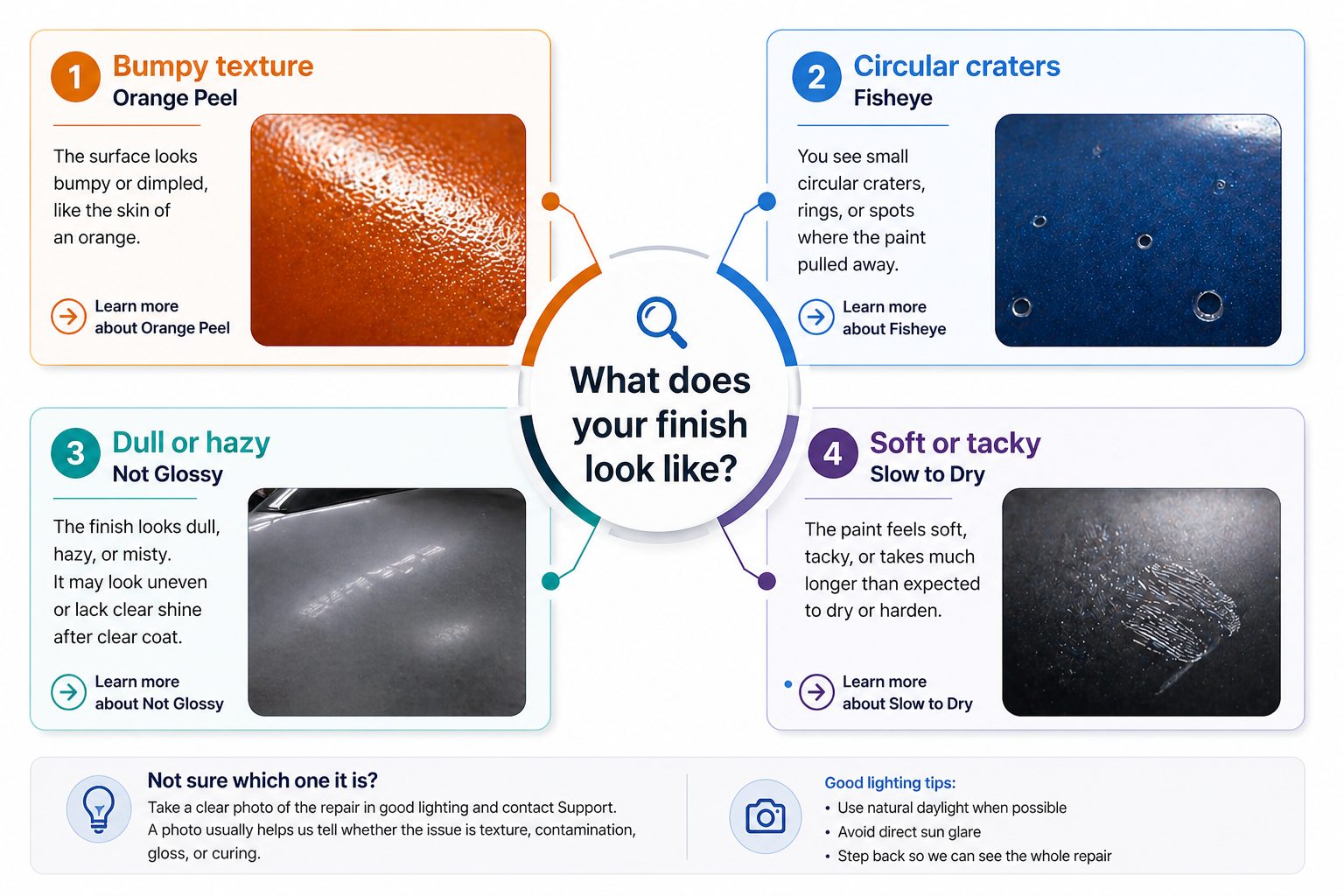
Bumpy, textured surface | Orange peel | Paint was applied too heavy, sprayed too close, or did not atomize smoothly |
Small circular craters or rings | Fisheye | Paint pulled away from contamination such as oil, wax, silicone, or residue |
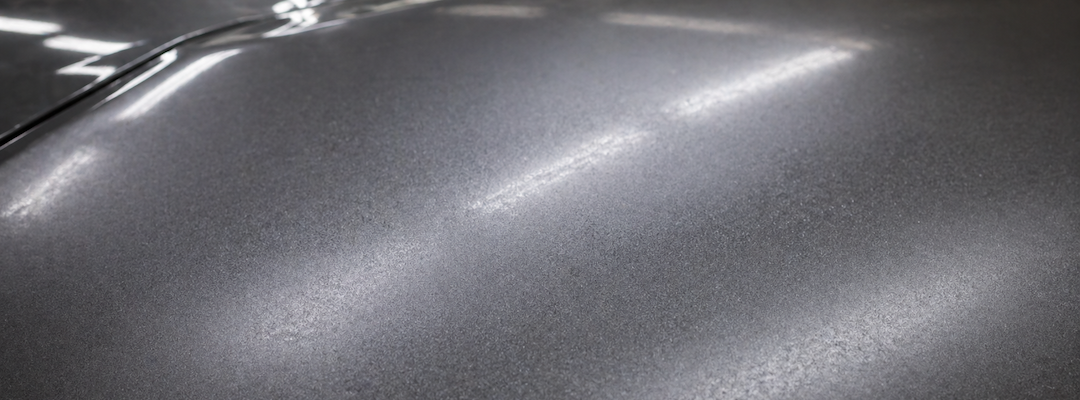
Dull, chalky, or not glossy | Dry spray / hazy finish (low gloss) | Clear coat dried before flowing smoothly, often from spray distance or technique |
Soft, tacky, or slow to dry | Curing issue | Humidity, low temperature, or heavy coats may be slowing the cure |
Choose the Issue that Looks Most Like Your Repair
Orange Peel
Your finish looks bumpy or textured, like the skin of an orange.
Learn how to fix it: What causes the “orange peel” finish when spraying?
Fisheye
You see small circular craters, rings, or spots where the paint pulled away.
Learn how to fix it: What Is “Fisheye” in My Paint Repair?
Not Glossy or Shiny
The finish looks dull, dry, hazy, or not reflective after clear coat.
Learn how to fix it: My Final Finish Is Not Glossy or Shiny
Soft or Slow to Dry
The paint feels soft, tacky, or is taking much longer than expected to dry.
Learn how to fix it: Painting in High Humidity
If Your Pattern Looks Different
Creased, fabric-like ridges in the paint surface
That's wrinkling, with its own mechanism: the top of the paint dried before the layer beneath cured.
See Why Is My Aerosol Paint Wrinkling?.
Raised bubbles specifically in the clear coat, after painting in hot conditions
That's the heat-driven case where solvents in the clear coat boiled on contact with a hot panel. See Why Is My Aerosol Clear Coat Bubbling?.
Paint peeling, lifting, or bubbling that doesn't match the patterns above
That's general adhesion failure or trapped material from inadequate prep, mixed products, moisture, or coats applied too heavy.
See Why Is My Aerosol Paint Lifting or Bubbling?.
FAQ
Why does my paint look dull or not shiny after clear coat?
This is often dry spray. It can appear as a hazy or dull finish.
It happens when clear coat is sprayed too far away, too fast, or too lightly, so it begins drying before it can level out.
As a result, there isn’t enough smooth, wet clear coat on the surface for gloss to develop.
Why does my paint look bumpy after spraying?
This is usually orange peel, caused by paint applied too thick, spraying too close, or poor atomization. Adjust distance and apply lighter coats.
Why do I see small circles or craters in my paint?
That’s called fisheye. It happens when paint pulls away from surface contamination like oil, wax, or silicone.
The paint can’t adhere to those spots, so it separates and forms small circular craters.
The surface needs to be thoroughly cleaned before painting.
Why is my paint still soft or taking too long to dry?
This is a curing issue, often caused by high humidity, low temperature, or heavy coats. Paint needs proper conditions and thin layers to fully cure.
Can I fix a bad paint finish without starting over?
Sometimes, depending on the issue:
• Orange peel → usually requires sanding smooth and repainting
• Dry spray → may be improved with wet sanding and polishing if enough clear coat is present
• Fisheye (contamination) → typically requires sanding and repainting
How do I prevent these issues before painting?
Most finish problems can be avoided by:
• Cleaning the surface thoroughly before painting
• Painting in proper conditions (low humidity, moderate temperature)
• Applying thin to medium, even coats at the correct distance
• Allowing proper drying time between coats