

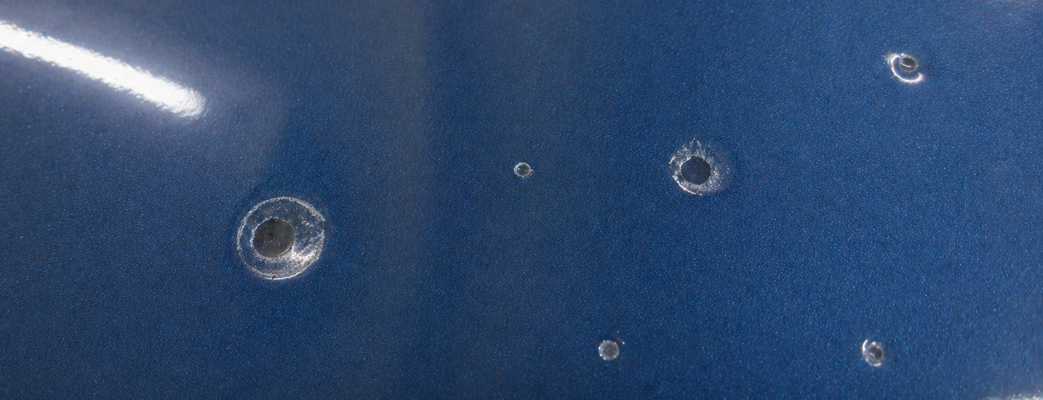
What It Looks Like
Small circular craters or “donut” shapes
Paint appears to separate or repel from a spot
Often scattered randomly across the surface
Why It Happens
Fisheye is almost always caused by surface contamination, not the paint or humidity.
Common causes include:
Oil or grease (even small residue from hands)
Wax or polish left on the surface
Silicone contamination (detail sprays, tire shine, etc.)
Improper or incomplete surface cleaning
👉 The paint cannot adhere to these spots, so it retracts away, creating the fisheye pattern.
How to Prevent It
Thoroughly clean the surface before painting
Use proper prep wipes or solutions (not just water)
Avoid touching the repair area after cleaning
Keep the area free of:
Wax / polish
Silicone-based products
Oils or residues
How to Fix Fisheye
Do not try to spray over it while wet.
Smooth out the surface until the defects are removed.
This is critical—remove the contamination that caused it.
Use light, even coats.
Common Mistake to Avoid
Blaming humidity or applying more paint
More paint will not fix fisheye—
it will continue to pull away from the contaminated spots.
FAQ
Is fisheye caused by humidity?
No. Humidity affects drying, but fisheye is caused by contamination on the surface.
Can I spray over fisheye to cover it?
No. The paint will continue to separate unless the contamination is removed.
Is fisheye the same as orange peel?
No.
Fisheye = contamination (paint repels)
Orange peel = application issue (texture)
Can fisheye happen with aerosol paint?
Yes. It’s not a product issue—it’s a surface prep issue.