

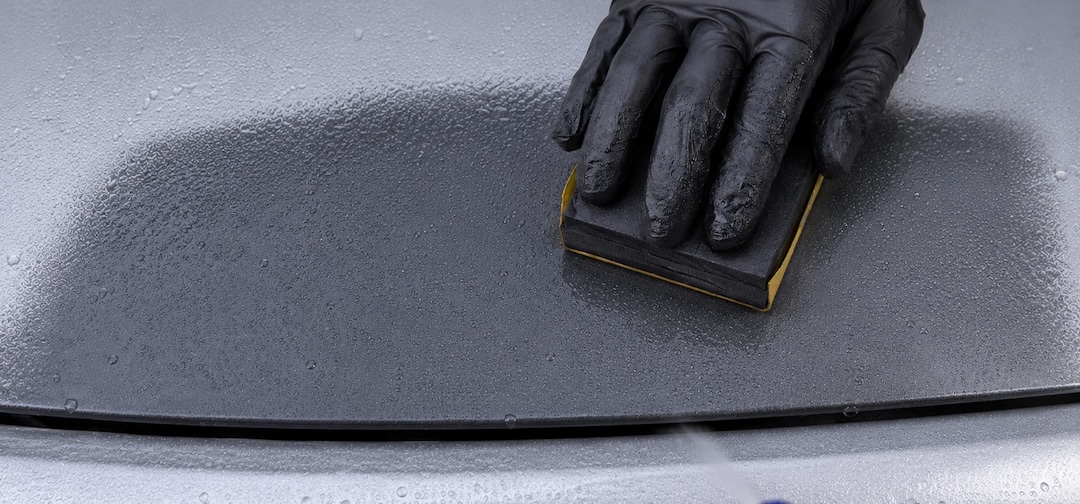
Yes — touch-up repairs can need a do-over for any number of reasons, and the procedure is the same regardless of cause. Let any fresh clear coat cure at least 72 hours, scuff with 600-grit wet sandpaper, clean, apply base color coats, and re-clear over the new color.
Quick Reference
Scenario | Wait before scuffing | Steps |
|---|---|---|
Over a freshly clear-coated repair | At least 72 hours for full cure | Scuff → clean → base color → re-clear |
Over factory finish | No wait — factory paint is already cured | Scuff → clean → base color → re-clear |
When You'd Use This Procedure
A touch-up repair can need a do-over for any number of reasons — coverage shortfalls on the first pass, a wrong color code applied without testing, a skipped step on a metallic or tri-coat, or anything else that left the result somewhere you didn't want it. The same procedure also applies if you're adding color over an existing factory finish.
Whatever the cause, the steps below are the same. Only the wait time differs: fresh clear coat needs to cure first; factory finish is already cured.
What You'll Need
600-grit wet sandpaper
Clean water
Prep wipe or wax and grease remover
Clean, lint-free cloths
Your base color paint
Your clear coat
Step-by-Step Procedure
If you just applied clear coat, wait at least 72 hours before moving on. Working over partially-cured clear will damage the surface — you need full cure for the scuffing in the next step to work as adhesion prep rather than as paint removal. (See the Drying Time Summary for the full cure-time table.) If you're working over factory finish, you can skip this step — factory paint is fully cured.
Light scuffing gives the new base color something to bond to. Keep the sandpaper and surface wet throughout. The goal is to dull the gloss, not to remove the clear coat — stop as soon as the surface looks matte.
Wipe down with a prep wipe or wax and grease remover. Any residue from sanding or skin contact will compromise adhesion of the new color.
Apply as many coats as it took to reach a color match on the included test card — that's what tells you how many your specific color needs. Follow the application procedure from your kit instructions.
Once your base color is at full coverage, apply clear coat the same way you did the first time.
Important: Wait for Full Cure Before Scuffing
If the clear coat hasn't fully cured, scuffing will pull off the partially-set film instead of dulling its surface. The 72-hour minimum applies to the standard aerosol clear coat in most kits — fully cured clear is durable enough to wet-sand, but partially cured clear is not.
FAQ
How do I know if my clear coat is fully cured?
Wait at least 72 hours for the standard aerosol clear coat in most kits. Cured clear coat is hard, glossy, and doesn't dent under fingernail pressure. The Drying Time Summary has the full table for each kit type.
Why is it OK to wet-sand clear coat here when other articles say not to wet-sand?
The distinction is the material. Base color paint is waterborne — water dissolves or lifts it whether the paint is fresh or fully cured. So wet-sanding base color paint removes it, which is why you never wet-sand a repair you want to keep. (Flip side: if you have a bad pre-clear-coat repair you'd rather start over on, wet-sanding is how you'd remove it — contact Support for guidance.)
Clear coat is a different material: once fully cured, it forms a hard, waterproof film that holds up to wet sanding. So wet-sanding the cured clear coat in step 2 is safe.
What if I don't scuff first?
The new base color won't bond properly. You'll likely see lifting or peeling once the new repair dries — see Why Is My Aerosol Paint Lifting or Bubbling? for more about that. Scuffing is the step that makes the new layer stick.
Can I skip the clear coat over the new color?
No. Uncoated base color is vulnerable — it's waterborne and not protected against weather, washing, or wear.
The clear coat is what locks the color in, gives the finish durability and matches the factory finish (glossy or matte finish).
See Is It Necessary to Use Clear Coat? for more on why.