

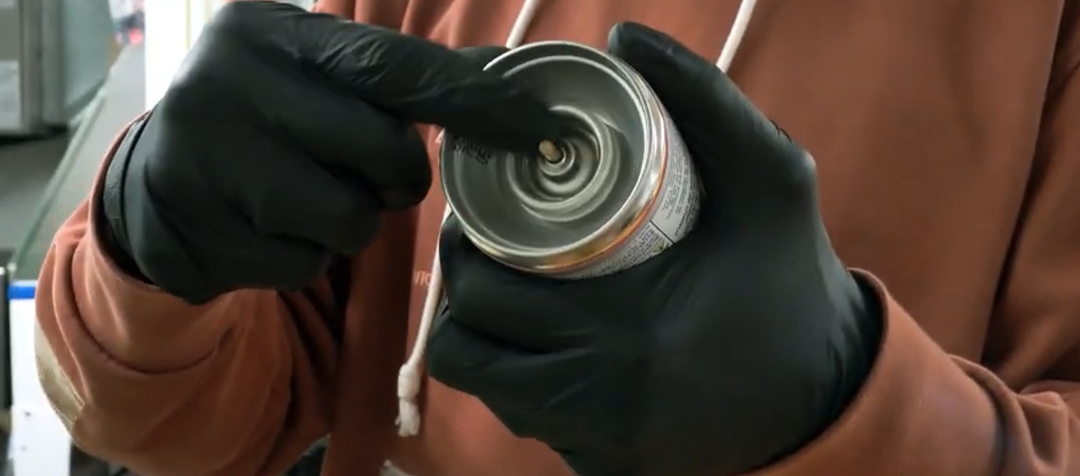
2K aerosol clear coat is a two-component product — a hardener is sealed inside the can and released by activating it right before use. Once activated, shake for 2 minutes and spray within 48 hours. A 2K clear coat cures harder than a 1K, which makes it the right choice for larger repairs and surfaces that see fuel, harsh sun, under waterline, or road chemicals — but it also needs proper PPE (respirator with organic-vapor cartridges, not a dust mask) and tighter project planning.
Quick Reference: 1K vs. 2K
1K Aerosol Clear | 2K Aerosol Clear | |
|---|---|---|
Best for | Spot repairs, chips, scratches; time-flexible projects | Larger leading-edge part repairs, whole-panel work; fuel / UV / chemical / waterline exposure |
Cure type | Solvent evaporation | Chemical cross-linking after activation |
Activation step | None | Press the button on the bottom of the can; shake 2 minutes |
Potlife | None | 48 hours from activation |
Final hardness | Standard | Harder, more resistant to fuel / chemicals / UV |
PPE | Ventilation + dust mask | Respirator with organic-vapor cartridges (required) |
If you're not sure whether 2K is right for your repair, see "When to Choose 2K" below — or contact Support for a second opinion.
What 2K Means
The "2" in 2K stands for two-component. The clear coat resin and the hardener that triggers its cure are two separate chemicals that have to be mixed for the clear to cure to its full hardness. In a 2K aerosol, the hardener is sealed inside an inner capsule. Pressing the activation pin on the bottom of the can ruptures that capsule and releases the hardener into the clear coat.
Once activated, the hardener and resin start chemically cross-linking. That's the chemistry behind everything else about 2K — why you have to shake to mix, why you have a 48-hour working window, why the cured film is harder, and why the PPE requirement is in a different category than 1K.
1K clear coat ("one-component") cures by solvent evaporation only — once sprayed, the solvent flashes off into the air and the clear film hardens behind it. No activation step, no working-window clock, but a less hard final film than 2K.
When to Choose 2K
Use 2K when any of these apply:
The repair area is most of or a whole leading edge part. A larger area of a front bumper.
The surface sees harsh conditions. Gas-tank surrounds, hoods that get a lot of UV, lower body panels exposed to road chemicals, very cold environmental conditions subject to fast temperature drops.
Watercraft below [or above] the waterline. Repainting the hull of a watercraft.
You want OEM-grade durability on the repair. Factory clear coats are cross-linked; 2K matches that chemistry.
1K is the right choice for:
Spot repairs on a chip or scratch or key mark where the surrounding factory clear is intact.
Time-flexible projects that you may spray over multiple days or weekends — no working-window clock to plan around.
Smaller and medium size repairs where the simplicity of "no activation, no potlife" outweighs the durability gain of 2K.
If you're not sure which fits your repair, contact Support with a photo of the area and we'll help you choose.
Important: PPE for 2K
Once activated, 2K aerosol contains isocyanates as the hardener crosslinks. Isocyanates are a respiratory sensitizer — repeated exposure can cause lasting health effects, including occupational asthma. PPE for 2K is in a different category than PPE for 1K. It's not a recommendation; it's a requirement.
What you need:
A reusable half-face or full-face respirator with organic-vapor (OV) cartridges
P100/OV combination cartridges are also fine. What doesn't work: dust masks, surgical masks, particulate-only respirators (N95, P100 alone), and most "disposable OV" respirators sold for paint work — those are typically rated for nuisance odors, not hazardous chemical vapor. A reusable half-face respirator with OV cartridges is the entry-level standard for 2K work. Replace cartridges on the manufacturer's schedule; once they've absorbed enough solvent vapor they stop protecting you.
Eye protection
Safety glasses or goggles.
Skin coverage
Long sleeves and chemical-resistant gloves (nitrile, not latex).
Adequate ventilation
Outdoors or in a space with active airflow. Don't spray 2K in an enclosed garage without ventilation, even briefly.
If you don't have a proper respirator on hand, use 1K for this repair and order the right respirator before your next 2K project.
How to Activate the Can
This is the step customers ask about most. The procedure is printed on the back of the can, but the print is small — here it is with room to read.
Before you start:
PPE on
Work area ventilated
Project scoped to fit inside 48 hours
The red activator knob you'll need for Step 4 is stored inside the clear protective cap on top of the can.
This mixes the clear coat itself, before the hardener gets added in. Shake vigorously — you should hear the agitator ball moving freely.
Pull out the red knob from the clear protective cap — take it out and set it within reach. You'll use it in Step 4 to press the activation pin (pressing the pin with a bare finger isn't comfortable, and it's hard to get a clean click that way).
Turn the can upside down with the clear protective cap still over the nozzle.
You'll see a small metal pin sticking up from the bottom of the can — that's the activation pin.
The underside of the red knob has a recess that fits over the pin. Press the knob straight down firmly until you hear and feel a pop or click. The click is the only confirmation that activation worked.
If you don't hear a pop or click, press again until you do. Without activation, the clear coat will spray but won't cure to its 2K hardness — it will behave more like a softer film.
In a 2K aerosol, the hardener is held in an inner capsule until you press the activation pin on the bottom of the can.
This mixes the hardener thoroughly into the clear coat. Incomplete mixing means uneven cure, so don't shortcut the second shake.
The 48-hour working window starts at activation. Plan to spray within an hour or so when possible — the longer you wait, the less working time you have left.
After Activation: Plan to Use the Whole Can
Once activated, the chemistry doesn't pause. The clear coat will progressively harden inside the can over the 48-hour working window (called potlife on the can label), and after that it can no longer be sprayed. A few practical points:
Shake periodically during use — every few minutes if your job runs longer than a few minutes of continuous spraying. Keeps hardener and resin evenly mixed.
Plan your project around the 48 hours. If the work will take more than one session, schedule activation for the session where you'll do the most spraying, and time everything inside the window.
Don't try to save activated 2K for a future project. The chemistry continues whether you're spraying or not.
Application Tips
Apply 2K in two medium-to-full coats, with about 5 minutes of flash time between coats (extend slightly if you're spraying toward the cool end of the temperature range), sprayed at 6–8 inches (15–20 cm) from the surface. Heavy coats are no more forgiving in 2K than in 1K — trapped solvent can still cause cracking or finish issues. For trigger technique that applies to both 1K and 2K aerosols, see Aerosol Spray Trigger Tutorial. For the drying-stage timing once you've finished spraying, see Drying Time Summary.
Apply 2K in conditions that are warm enough and not excessively humid. The manufacturer's optimum range is 64–77°F (18–25°C) at 40–60% relative humidity — well outside that, you're more likely to see finish issues. Even though 2K cures by chemical cross-linking rather than solvent evaporation alone, temperature differences and improper conditions can still cause problems — see Aerosol Clear Coat Cracking for the full picture.
Clear the Valve When You Stop Spraying
When you finish a spray session — whether you're done with the project or just pausing within the pot life — turn the can upside down and spray for 3–5 seconds. This clears the valve and prevents clear coat from setting up inside the nozzle. With 2K's pot-life clock running, you don't want to discover a clogged valve the next time you pick the can up.
FAQ
What does "2K" mean?
It's industry shorthand for "two-component." The clear coat resin and the hardener that triggers its cure are two separate chemicals; mixing them is what enables the chemical cross-linking that gives 2K its hardness and durability.
How do I know if activation worked?
You'll hear and feel a click or pop when the inner capsule ruptures. That pop👂click is the confirmation. If you didn't hear it, press the button again until you do. Without that click, the can will still spray, but the clear coat won't cure to its 2K hardness.
Why does 2K need a respirator when 1K doesn't?
After activation, 2K contains isocyanates as the hardener crosslinks. Isocyanates are a respiratory sensitizer — repeated exposure can cause lasting health effects. A proper respirator with organic-vapor cartridges blocks them; a dust mask doesn't. 1K is solvent-based without isocyanates, so a dust mask plus ventilation is sufficient for most 1K work.
When does the 48-hour clock start, and can I wait between activation and first spray?
The clock starts at activation (when you hear the pop👂click), not at first spray. Within the 48-hour window you technically can wait between activation and first spray, but every minute spent waiting is a minute you don't get to spray. Start spraying soon after activating — within the first hour is best.
Can I save activated 2K for a future repair?
No. Once activated, the hardener and resin are cross-linking inside the can whether you're spraying or not. Within 48 hours the contents will harden enough that the can stops spraying properly. Plan your project to use the activated can within the working window.
Do I need 2K for a small chip or scratch?
For most small spot repairs, 1K aerosol is the simpler choice — no activation, no working-window clock, no respirator. 2K is the right call when the repair area is a larger leading edge part or when the surface sees harsh conditions (fuel exposure, intense UV, waterline, road chemicals).
What if I sprayed without activating the can?
Contact Support — we'll help you assess what's on the panel and the right next step for your specific situation.
What's "potlife" mean? I see it on the can label.
Industry shorthand for the working life of an activated 2K product — the window during which it will still spray properly. For our 2K aerosol clear coat, the potlife is 48 hours from activation.
Can I use 2K over 1K paint, or 2K over 1K primer?
Generally yes — 2K clear coat is compatible with most properly cured and prepped underlying paint and primer layers, including ScratchesHappen waterborne base coats and 1K primer. Make sure the underlying coats are fully cured before applying 2K (see Drying Time Summary).
One known exception: don't apply 2K over acrylic lacquer paints — the manufacturer specifies this combination isn't compatible. If you're working over an unknown existing finish and aren't sure whether it's lacquer, contact Support before spraying.
For mixed-brand layering, see Can I Use Other Brand Primers and Clears with ScratchesHappen Paint? — and contact Support to confirm if you're working with an unusual combination.