

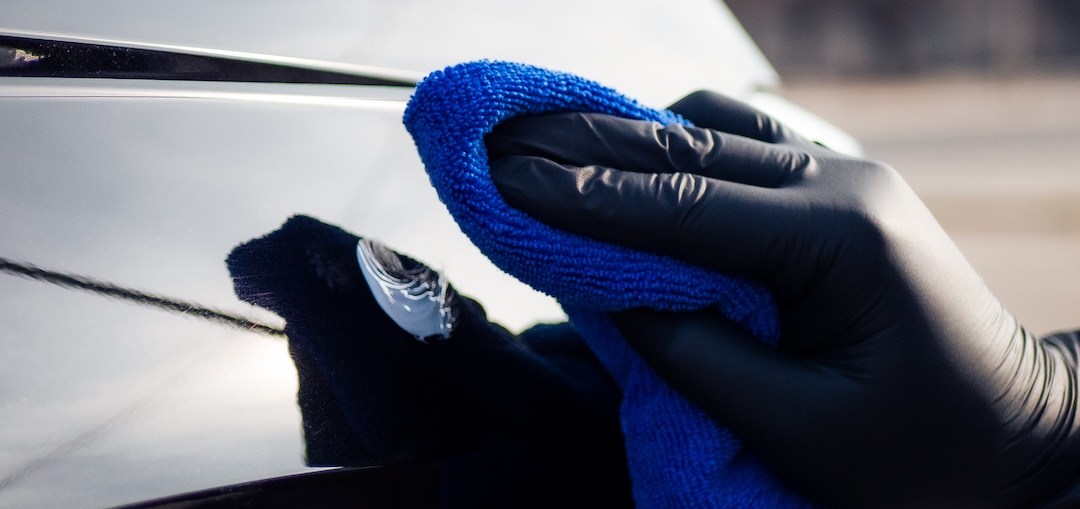
More aggressive correction compounds can remove too much material too fast.
What "Polish Compound" Actually Means for Touch-Up Work
Removing excess touch-up paint and refining a repair requires a different balance than full paint correction.
For touch-up repairs, the goal is usually:
Smoothing excess paint at the edges of a repair
Softening the transition between the repair and the surrounding finish
Restoring gloss to the cured clear coat
You're working in a small area, on fresh material, with a medium layer of clear coat sitting on top. Aggressive cutting in that environment causes more problems than it solves.
Why More Aggressive Compounds Are Risky on a Touch-Up
Paint correction compounds — products marketed for full-panel correction, sanding-mark removal, or heavy oxidation — can remove material quickly. On a touch-up repair, that speed becomes a risk:
Cutting through fresh clear coat before you intend to stop
Removing touch-up paint from inside the scratch or chip you just repaired
Enlarging the repair area beyond what the touch-up was meant to address
Products marketed simply as "compound" or "rubbing compound" vary widely in aggressiveness. Reading the label and the manufacturer's intended use matters more than the product category alone — a "compound" designed for oxidation removal will cut harder than a "compound" designed for finishing work, even though both share the category name.
Medium-Abrasive Polishing Compound: The Sweet Spot for Touch-Ups
A medium-abrasive polishing compound is:
Strong enough to remove excess touch-up paint and refine cured clear coat
Gentle enough to leave the repair and surrounding factory finish intact
ScratchesHappen Polishing Compound is built around this middle range — a ceramic-particle, medium-abrasive formulation designed specifically for the cleanup and blending stages of touch-up work, not for full paint correction.
How to Read a Compound's Label
When evaluating any compound for touch-up work, look at the manufacturer's described use case:
"Touch-up cleanup," "edge refinement," or "polishing compound" — usually a good match for localized touch-up work
"Cutting compound," "correction compound," "compound for sanding marks," or "for heavy oxidation" — usually too aggressive for localized touch-up cleanup
If the label emphasizes how much material the product removes or how quickly it cuts, that's a signal to use it with caution (or not at all) on a fresh repair.
Comparing Common Compound Products
The chart below puts common polishing and rubbing compounds onto an abrasiveness spectrum — useful for seeing where specific products fall between gentle polishing and aggressive cutting:
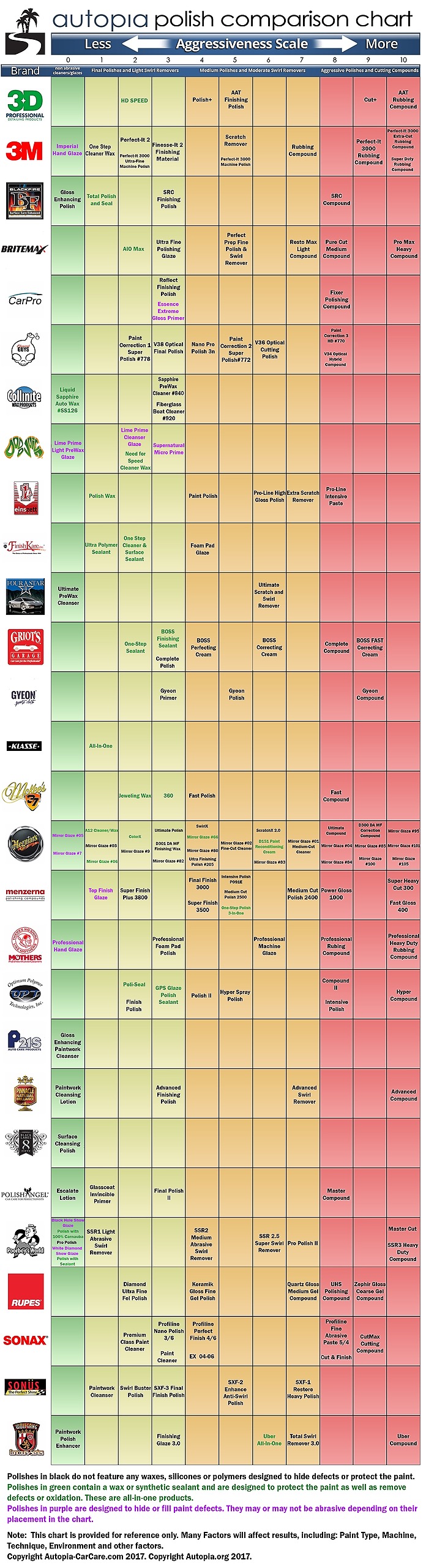
For a broader third-party roundup, see Best Rubbing Compounds on Auto Quarterly. When choosing from that list for touch-up work, the medium-abrasive range is the safest pick — heavier-cutting correction compounds will work but carry the risks described above.
FAQ
Can I use a paint correction compound on my touch-up?
You can, but it carries risk. Paint correction compounds are designed to cut quickly through full-panel imperfections like oxidation or deep sanding marks. On a localized touch-up repair, that cutting speed can remove paint from inside the scratch you just filled, cut through the fresh clear coat, or enlarge the repair area beyond the original damage. For touch-up cleanup, a medium-abrasive polishing compound gives you better control..
Will an aggressive compound damage my touch-up repair?
It can — by removing the fresh paint or clear coat you just applied, or by enlarging the worked area. The fresh layers in a touch-up repair are softer and thinner than fully-cured factory baked-in-an-oven paint, so they cut faster than you might expect.
If you've already started with too-aggressive a compound and noticed the repair getting worse, stop and contact Support before continuing.
How is the ScratchesHappen Polishing Compound different from a paint correction compound?
ScratchesHappen Polishing Compound uses a medium-abrasive ceramic-particle formulation designed for the cleanup and refinement stages of a touch-up repair. Paint correction compounds — products designed for heavy oxidation removal, sanding-mark elimination, or full-panel correction — are typically more aggressive and cut more material per pass than touch-up work needs.
What's the difference between polishing compound and rubbing compound?
Terminology varies by brand. In general, "rubbing compound" implies more aggressive cutting action, and "polishing compound" implies a gentler, gloss-restoring action — but the labels aren't standardized across manufacturers. Read the manufacturer's described use case rather than relying on the category name alone.
Can I use a household polish or wax instead of a compound?
No. Household polishes and waxes are designed to protect or shine already-smooth surfaces. They don't have the abrasive action needed to remove excess touch-up paint or refine a repair surface.
Use a polishing compound first, then automotive wax can go on as protection — but no sooner than 30 days after the clear coat application.