



Section 1: Understanding Tri-Coat Paint
A tri-coat paint finish uses three layers that work together to create the depth and light response seen in pearl and metallic finishes:
Base Coat (L1) — the main color foundation.
Mid-Coat (L2) — a more translucent color layer that adjusts tone and often adds metallic or ceramic flakes for metallic or pearl finishes.
Clear Coat — the final clear layer that seals and protects as well as providing the matching finish, usually glossy, sometimes matte for certain colors.
Each layer is designed to bond to the next, so when applied in order, your result will blend seamlessly with your vehicle’s original finish.
If your color happens to be tri-coat, your paint order already includes the L1 and L2 paint that you need. Each paint layer is clearly labeled in order of application, so just follow the instructions for a smooth, factory-grade finish.
Most vehicle colors are not tri-coat; they use only a base color and clear coat. Tri-coat systems appear more often on pearl whites, bright reds, and select metallics — colors designed to reflect and refract light for extra depth and shimmer.
Section 2: Why Some Colors Are Tri-Coat
Automakers use tri-coat finishes on specific factory colors to create subtle visual depth — the way pearl whites glow or metallic reds seem to shift in sunlight. They’re applied the same way as any other color — just with two color layers instead of one to fine-tune how light interacts with the finish.
Tri-coat systems:
Capture pearl or metallic highlights that change gently with angle and light.
Deliver greater color depth and a premium, “showroom” appearance.
Are fully supported by your ScratchesHappen paint kit and step-by-step guide.
Watch: Tri-Coat Paints Explained
See our technician explain the base (L1) and mid-coat (L2) layers in our kits.
How to Tell If Your Paint Kit Is Tri-Coat
You’ll know your color is tri-coat if your kit includes two separate color paints:
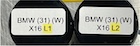
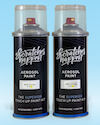
Examples: Bottle kit (left) and Aerosol kit (right). Each includes two labeled paints — L1 for the base coat and L2 for the mid-coat, which together create a true factory color match.
Label | Purpose | Step |
L1 – Base Coat | The solid foundation color | Apply first - several coats |
L2 – Mid-Coat | A translucent tint layer that adds depth and tone | Apply second - several coats |
Clear Coat | Seals and protects the color, providing the final surface finish — glossy or matte, depending on your paint formula | Apply last - 2 to 3 coats |
FAQ
How can I tell if my paint is a tri-coat?
Is tri-coat paint harder to apply?
Why do automakers use tri-coat paint?
Related Help Docs & Videos
Learn what comes next — from applying your tri-coat mid-layer to getting a flawless, factory-matched finish.
How To Spray ScratchesHappen Touch Up Paint
This is complete how-to video showing all steps (and some pro tips) on how to prep, prime and paint a large area.
Unboxing ScratchesHappen Paint Kits
See what’s inside each kit. If your color is a tri-coat, your package will include L1 and L2 paints.
Control (or drop) Coat Explained for Tri-Coat L2 (Video)
Watch our technician demonstrate spraying layer 2 of a tri-coat.